
How Two Front-Desk Staff Got Their Real Jobs Back in Six Weeks — The Lee Ungno Museum's Ticketing Turnaround
In one line
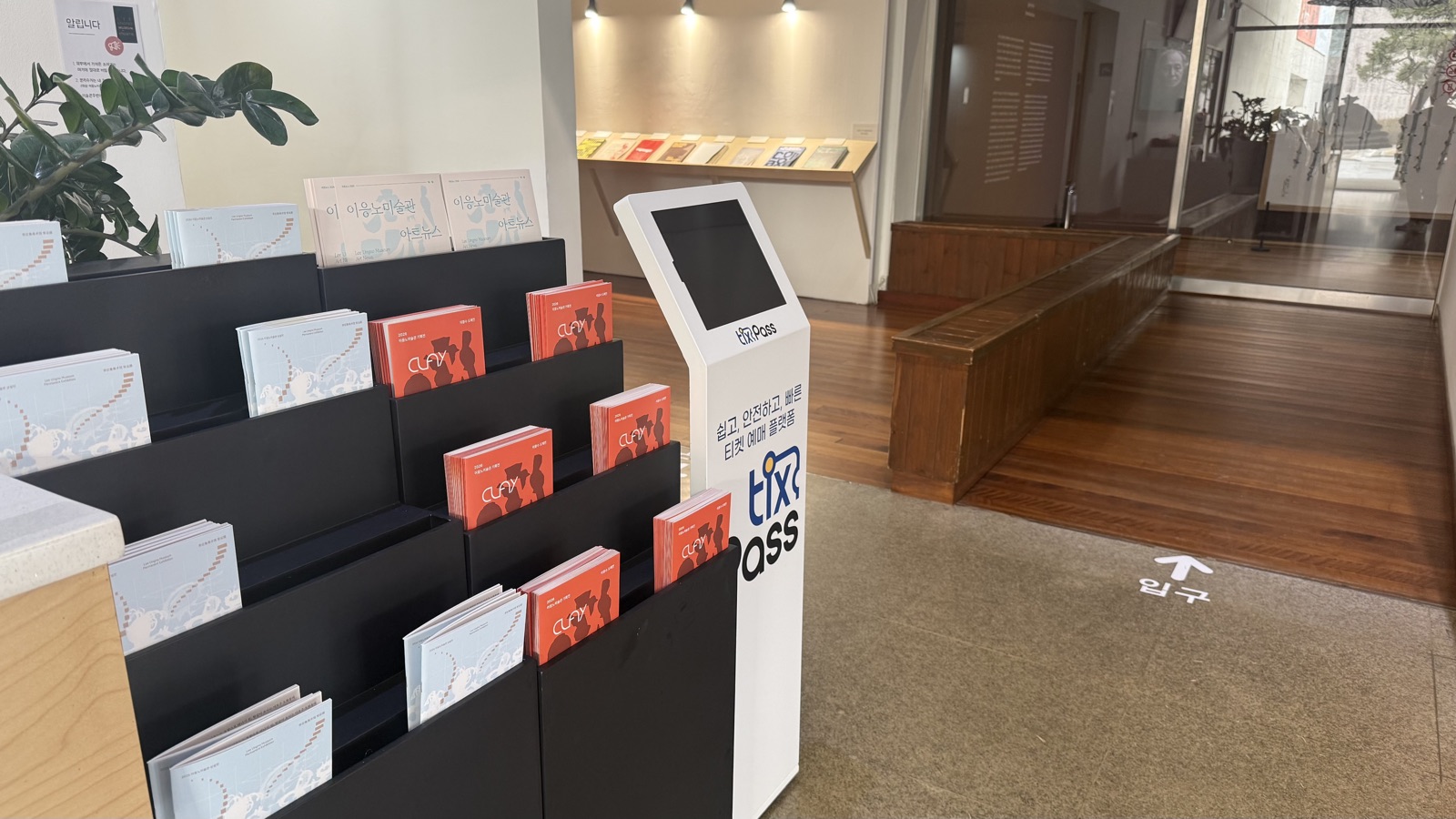
The Lee Ungno Museum, operated by the Daejeon Goam Art & Culture Foundation, adopted TixPass on April 7, 2026 — the same day its 〈Contemporary Artists Exhibition〉 opened. In six weeks: 15,272 tickets issued, 53.4% self-service kiosk issuance, and 17 ticket types managed as one. Two front-desk staff returned to their core curatorial and planning work, and data on foreign visitors, hourly admissions, and in-gallery flow — once reported only by gut feeling — was quantified for the first time.
What kind of place is the Lee Ungno Museum
Located in Dunsan-dong, Seo-gu, Daejeon, the Lee Ungno Museum is Korea's first museum dedicated to a single artist. A public museum that exhibits, researches, and teaches the work of Goam Lee Ungno, a master of Korean abstract art, it is operated by the Daejeon Goam Art & Culture Foundation.
In scale, over 2025 it welcomed 68,206 visitors across four special exhibitions (permanent exhibition counted separately), and in 2026 it is running five exhibitions with a target of 80,000 visitors a year. As a single-artist museum, it must reliably manage an admission flow of tens of thousands of people a year.
Before — the invisible heavy lifting at the front desk
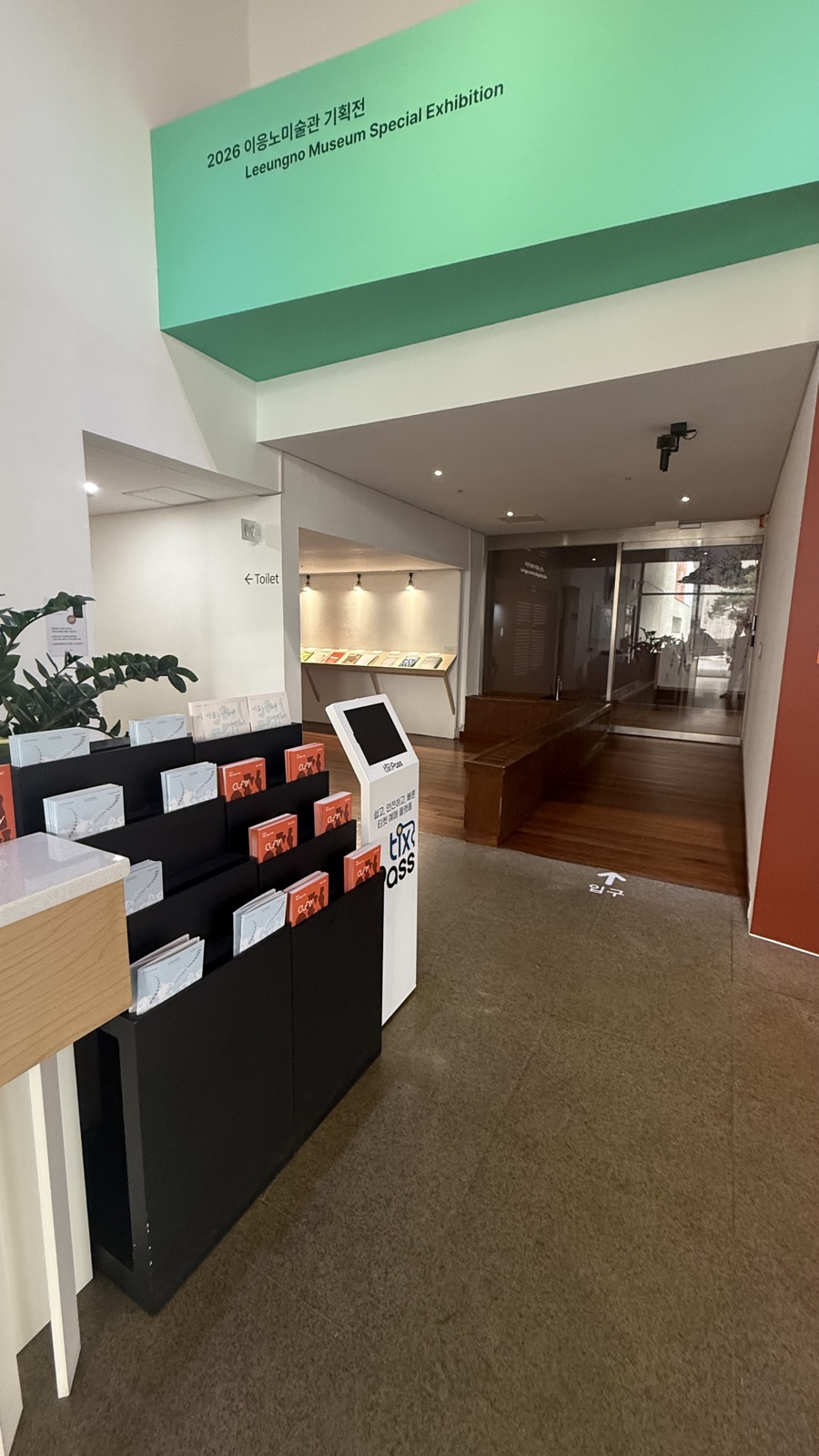
Before adoption, the Lee Ungno Museum ran ticketing and visitor management on a different solution. Visitors issued paper tickets at a kiosk, and two front-desk staff stood up each time to greet them and guide them to the galleries.
There were two problems.
- The guidance itself was heavy labor. A pattern of standing up to greet visitors hundreds of times a day meant their flow was repeatedly broken by other tasks.
- Core curatorial and planning work fell behind. The staff at the front desk were also meant to handle the museum's curatorial work and its planning and operations. As their time got tied up greeting visitors, focus and momentum on their core work dropped.
Greeting visitors kindly is of course a given, but when it breaks the entire rhythm of the day, you stop being able to see where your other work is falling behind. — Lee, Associate
The turning point — a connection that began with a government program
The first contact came when TixPass proposed the Lee Ungno Museum as a beneficiary institution for a government program. The museum's criterion was not a simple ticketing-system swap, but whether it could redesign the very structure of front-desk operations.
Timing was decisive. April 7, 2026 was the opening day of the new special exhibition 〈Contemporary Artists Exhibition〉 (Apr 7 – Jun 7, target 15,000 visitors). The museum chose to welcome the first visitors of the new exhibition on the new operating system. Tying a system swap to an exhibition opening on a single date means the weight of the decision is different.
The rollout — two weeks of setup, with the check-in kiosk at its core
The full setup took two weeks. There were two key customizations.
- Membership management module — unifying member and patron management
- Check-in kiosk — placed just before gallery entry, separate from the ticketing kiosk
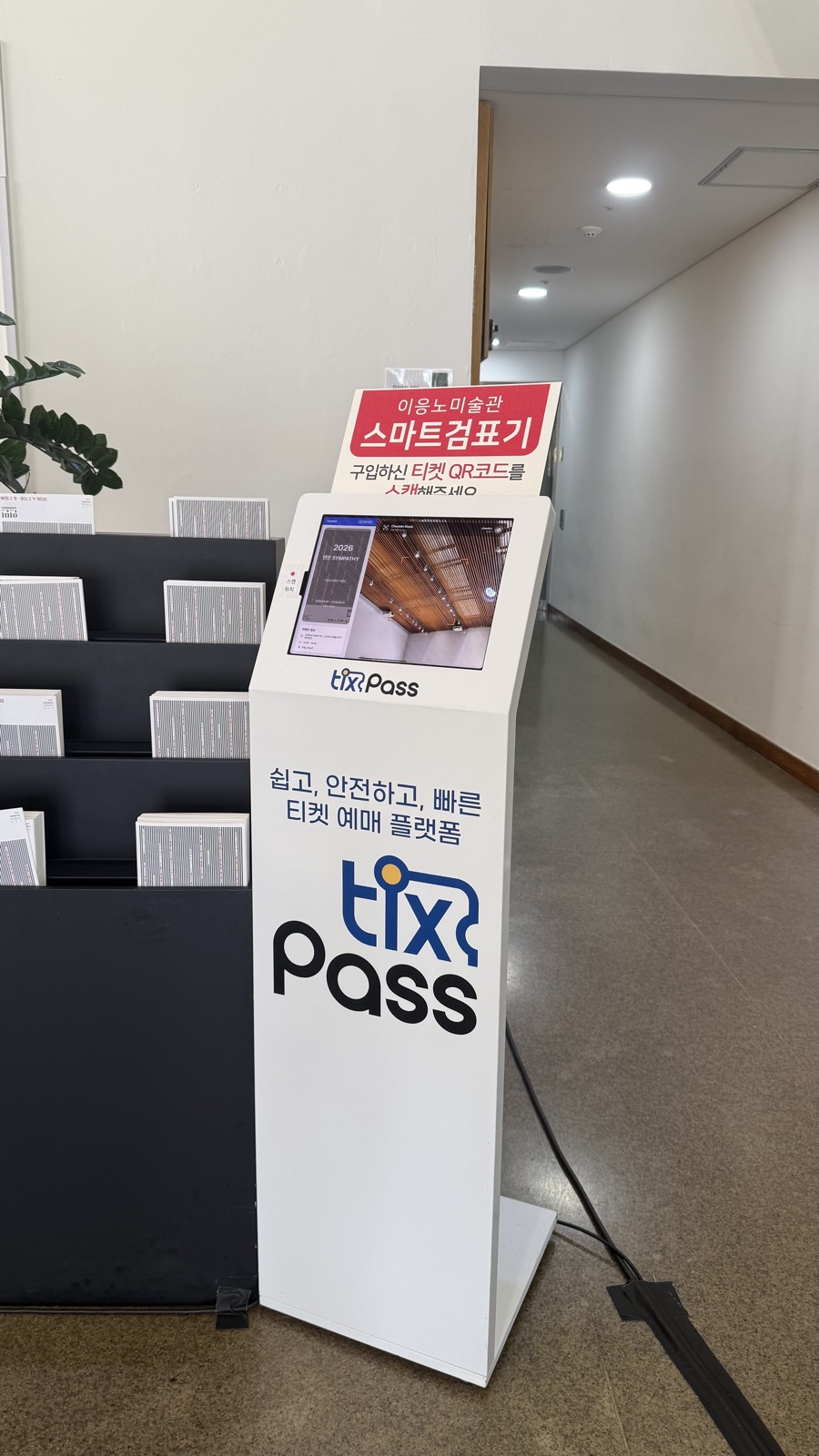
The check-in kiosk was the core. Previously, after issuing a ticket, visitors had to have it visually inspected at the front desk; now the flow simplified to ticket issuance → check-in kiosk in front of the gallery → free viewing. Front-desk staff no longer have to stand up every time.
After — what changed once six weeks had passed
The new system went live the moment 〈Contemporary Artists Exhibition〉 opened. The cumulative operating results for the first six weeks, from April 7 to May 22, 2026, are as follows.
Quantitative results — six weeks in operating data
- 15,272 tickets issued in total — the exhibition's annual target of 15,000 visitors, reached in six weeks
- 8,084 self-service kiosk issuances (53.4%) — more than half the issuance flow went unmanned, immediately reducing front-desk load
- 7,061 POS issuances (46.6%) — only attended transactions like groups and catalogs remained at the desk
- KRW 9,753,400 net revenue — admission + membership + catalog, counted together
- 17 ticket types in operation — adult / child·youth / group / 7 free-and-discount types / membership / 5 catalog types, managed as one
- 5,103 free and discounted issuances — social-discount policies such as senior, under-8, national-merit, and disabled, counted automatically
- 127 refunds (0.83%) — stable operation, with negligible refunds from system errors or payment issues
Qualitative results
- Two staff-members' worth of guidance resource freed each month → redeployed to core curatorial and planning work
- The front desk shifted to serving only visitors who need help → improved focus
- With the ticket-inspection step gone, visitors view freely after just checking in — "it feels more pleasant," they say
- The number of foreign visitors was quantified through multilingual issuance data (previously reported only by gut feeling)
- Collecting hourly-admission and in-gallery-flow data → securing a data asset for planning the next exhibition
- A mobile AI docent, slated for rollout from summer, will be added as the next layer of the viewing experience
Cutting guidance staff was never the goal. The goal was for that staff to return to their core curatorial and planning work — and in six weeks, you can see that change. — Do, Team Lead
The solution stack adopted
The TixPass modules the Lee Ungno Museum currently uses are as follows.
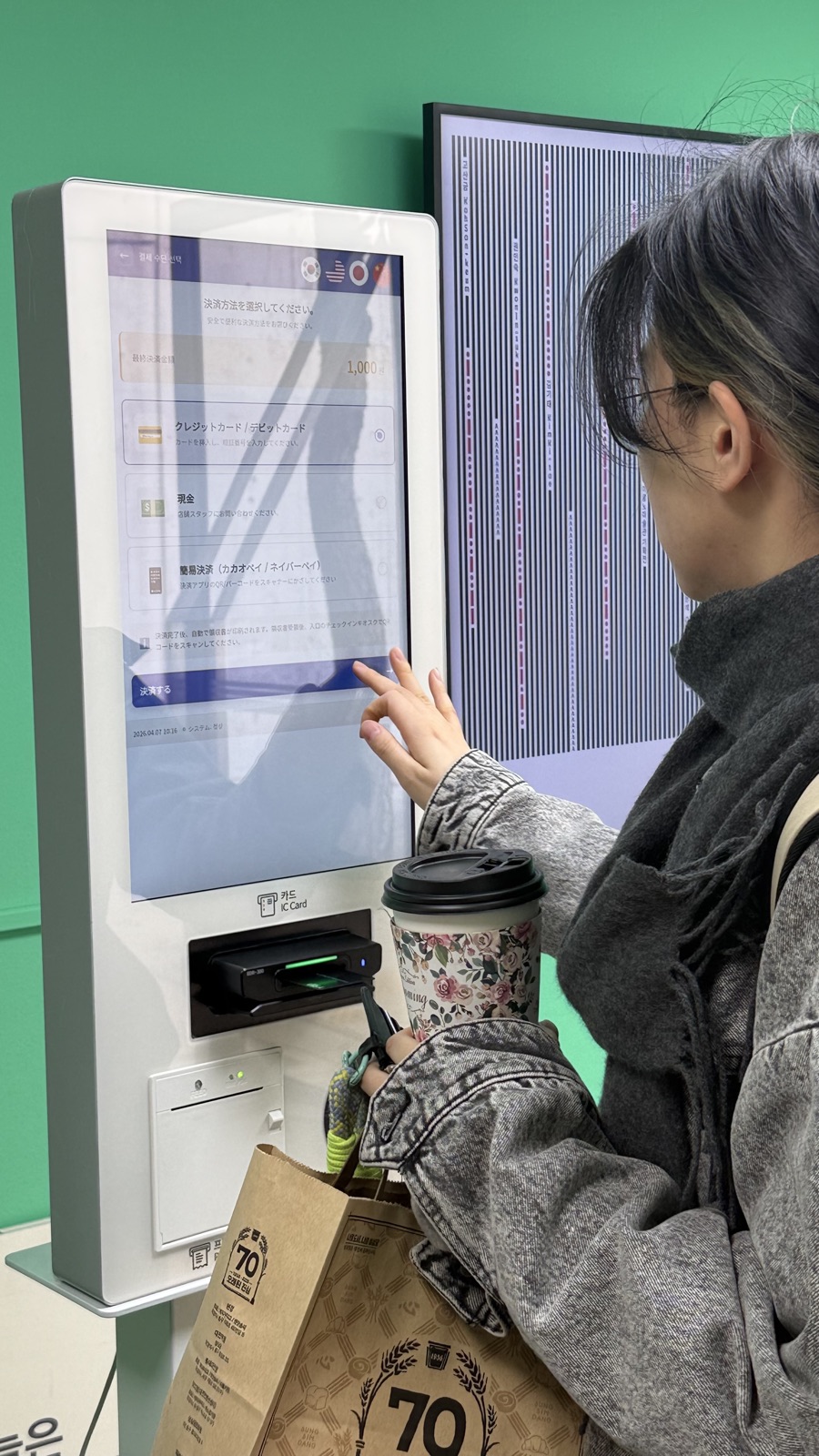
- Ticketing kiosk (Korean·English·Chinese·Japanese) — unmanned issuance + automatic collection of foreign-visitor data
- Check-in kiosk — automating the gallery-entry flow, removing front-desk load
- POS — catalog and merchandise sales + integrated payment
- Partner console (SaaS web) — exhibition/event registration & management, sales & statistics, one-click settlement reports, catalog & merchandise sales management, visitor-flow reports
- AI docent (mobile app) — slated for summer 2026, artwork commentary + improved visitor understanding
Next — from data to planning
In 2026 the Lee Ungno Museum runs four special exhibitions back to back: 〈Lee Jong-su Ceramics〉, 〈Contemporary Artists Exhibition〉, 〈Lee Ungno and Kim Tschang-yeul〉, and 〈Dance〉. The annual visitor target is 80,000. Once all of these exhibitions are counted on the same data infrastructure, it becomes data — which time slots, and which nationalities of visitors, linger in front of which works. The flow, commentary, and promotion strategy for the next exhibition no longer rely on gut feeling.
Add an AI docent to that, and the museum will extend a deeper viewing experience to mobile.
If you're ready to redesign your operations
Replacing a ticketing system isn't about swapping out an issuance terminal. It's about rebuilding the entire structure of operations — the front desk's day, the curator's workload balance, and the planning data for the next exhibition.
Ready to redesign your operations?
Replacing a kiosk isn't the point — rebuilding how your venue runs is.
¿Listo para rediseñar tus operaciones?
No se trata de reemplazar un kiosco, sino de replantear cómo funciona tu recinto.
Solicitar una demo